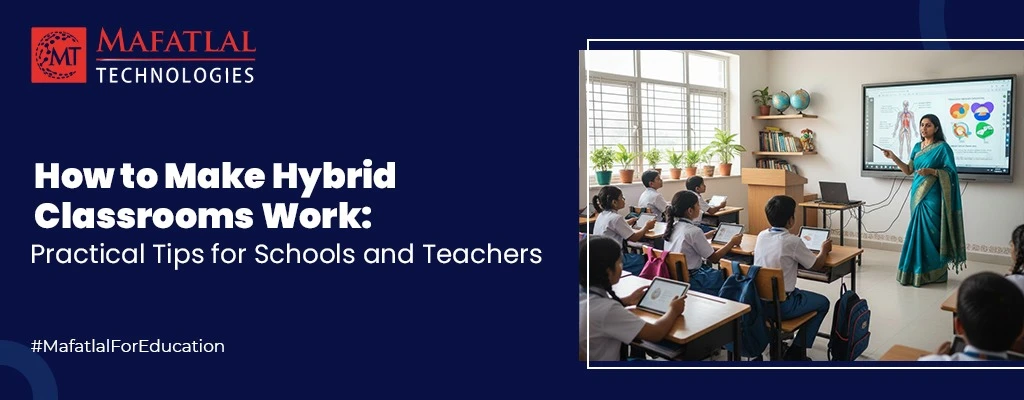
At 8:30 a.m., a teacher doesn’t just start a class anymore — they start a balancing act. Some students are seated right in front of them, books open and ready. Others are joining from homes miles away, adjusting headphones and checking their internet connection.
Different settings.
Same classroom.
Same expectations.
Hybrid classrooms didn’t arrive with a manual.
They arrived with questions.
How do we teach students who aren’t all in the same room?
How do we keep learning consistent?
How do we support teachers without adding to their workload?
Hybrid classrooms bring together learners who aren’t always in the same place — but still deserve the same attention, clarity, and sense of belonging. While this model can stretch teachers and systems, thoughtful planning and the right hybrid classroom strategies can turn complexity into connection.
Platforms like Mafatlal Technologies are helping schools adapt to these new models with smoother planning, better visibility, and real-time learning support.
This is how schools and teachers can make hybrid classrooms work really well.
Why Hybrid Classrooms Matter Today?
Hybrid setups bring the best of both worlds—classroom warmth and digital flexibility. When implemented well, they can:
- Reach students who can’t always be physically present
- Allow teachers to tailor learning pace and format
- Build student skills for the digital future
- Strengthen collaboration between school and home
But to enjoy these benefits, schools need strong —not just devices. This is where Mafatlal Technologies help bring consistency and structure to hybrid teaching.
- Make a Strong Plan For Learning Both Online and In Person
The best hybrid classrooms don't rely on improvisation; instead, they use structured, predictable systems.
What Schools Can Do
- Make weekly lesson calendars that both online and offline students can see.
- Share learning outcomes and topic plans ahead of time.
- Use the same digital platforms for notes, homework, and updates.
- Make sure that your teaching flow matches the NCERT curriculum so that all students stay on track.
Why it helps: Clear planning makes sure that the integration of online and offline teaching goes smoothly instead of being all over the place.
- Use Hybrid Learning Tools That Help All Students
Technology should make the teacher's job easier, not harder.
Some useful tools are:
- Digital whiteboards for showing things in real time
- Video playback for students who miss class
- Interactive quizzes to check your understanding right away
- Dashboards for tracking progress in the classroom
When schools pick the right hybrid learning tools, teachers can spend less time fixing problems and more time teaching. Mafatlal Technologies, with the help of their classroom-ready digital tools, helps teachers to focus on teaching instead of troubleshooting.
How it helps: It keeps both real and virtual learners on the same path to learning.
- Encourage Student Engagement
The hardest part of hybrid learning is getting people to participate. Students at home may lose focus while students on campus may be in charge.
Try these ideas:
- Do a 3-minute warm-up activity at the beginning of each class.
- Call on students who are both online and offline equally.
- Use tools that let people work together, like polls, quizzes, and breakout rooms.
- Encourage group projects that include both home and school learners.
When students are really involved in hybrid learning, neither group feels left out.
- Support Teachers With Practical Training
Teachers are the heart of hybrid learning. Therefore, they need more support.
Schools can help by offering:
- Short workshops on blended teaching
- Peer sharing sessions to exchange classroom hacks
- Tech troubleshooting support
- Templates for planning hybrid lessons
Why it matters: Teachers should feel confident, not exhausted, when managing hybrid classrooms.
- Include Parents as Partners
Hybrid models work best when parents understand how to support at home.
How schools can help:
- Give parents clear schedules and expectations
- Share quick tech tutorials
- Provide weekly feedback summaries
- Explain how hybrid classrooms align with NCERT competencies
Hybrid learning becomes more stable and successful when home environments support learning.
Last thought: Hybrid classrooms are here to stay.
Hybrid learning isn’t a temporary fix. It's a chance to make learning spaces that are stronger, more flexible, and ready for the future.
Schools can make sure that students not only get by, but also do well, by using the right hybrid classroom strategies, carefully planning how to combine online and offline teaching, and following the best blended learning practices.
Hybrid classrooms don't split up students.
They are about getting all learners together, no matter where they are.
Ready to Build Stronger Hybrid Classrooms?
Mafatlal Technologies helps schools create seamless online–offline learning environments with smart lesson planning, hybrid-ready tools, and real-time student engagement features.
Book a Free Consultation with Mafatlal Technologies today and transform your classrooms into future-ready spaces.