
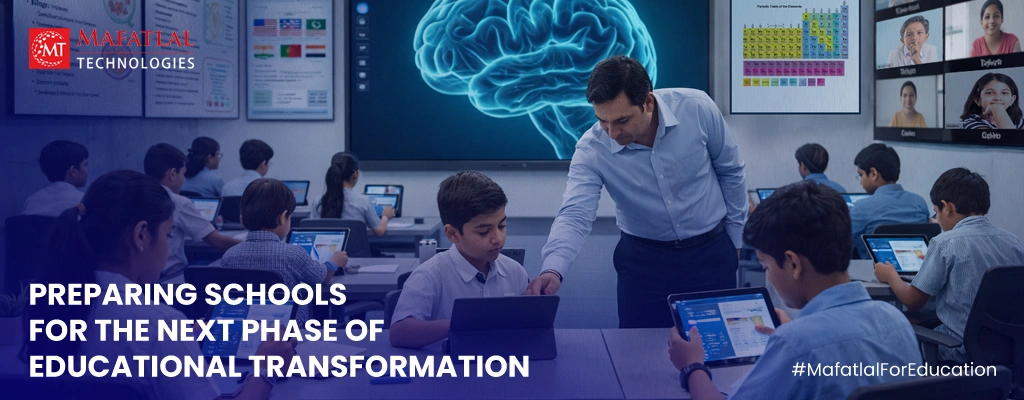
Preparing Schools for the Next Phase of Educational Transformation
- Admin
Change in schools doesn't usually come with a warning bell.
One year, the focus is on online classrooms.
Next, the focus shifts to NEP.
Now it's all about data, AI, results, and being ready for the future.
"Are we really ready for what education is becoming?" is a question that school leaders all over India are asking.
It's not about adding more screens or software in the next phase of change. It's about making systems that can change, help, and grow with schools. The rise of Educational Transformation AI-enabled learning platforms is at the heart of this change. These platforms are changing how decisions about teaching, learning, and leadership are made.
This is the direction that AI in education India is going in: from testing to expecting.
Why Educational Transformation Feels Harder This Time
Today's change is different from earlier digital shifts because it affects everything at once:
- Teacher roles
- Curriculum
- Ways to test
- Infrastructure
- What parents expect
Schools are not just using new tools; they are also changing the way they teach. And this is where a lot of institutions face NEP 2020 execution challenges.
The vision for the policy is clear. However, the reality on the ground is complicated. The real test of transformation is bridging that gap.
AI in Education India: From Buzzword to Backbone
For years, AI in education in India was seen as futuristic. Today, it’s becoming foundational.
AI is no longer limited to automation. In schools, it now supports:
- Student progress tracking
- Teacher planning and insights
- Early identification of learning gaps
- Outcome-based reporting
When implemented thoughtfully, AI in education India enables schools to move from reactive teaching to proactive support. But this only works when AI is embedded into daily workflows not layered on top of them.
This is why institutions are increasingly looking for integrated platforms rather than standalone tools.
Smart Classroom Adoption Is About Systems, Not Just Screens
A lot of schools have already bought hardware. But smart classroom adoption goes well beyond just using devices.
A real smart classroom has:
- Digital lesson planning
- Interactive content
- Skills-aligned assessments
- Real-time insights
Technology makes noise when it isn't integrated. Whereas smart classroom adoption makes things clear when it has the right structure.
Mafatlal Technologies designs smart classrooms based on how teachers really teach, making sure that technology helps - without getting in the way of learning. This approach makes smart classroom adoption easier and less stressful.
Hybrid Learning Solutions Are Now a Core Capability
Hybrid learning is no longer a temporary model.
Strong hybrid learning solutions allow schools to:
- Support students across locations
- Offer flexible access to learning
- Maintain continuity during
- Extend learning beyond the classroom
Effective hybrid learning solutions blend structure with flexibility. They rely on clear planning, shared platforms, and consistent visibility for teachers and leaders.
This shift is a key pillar of digital education transformation—and one that schools must strengthen, not postpone.
Teacher Adaptability with AI: The Real Make-or-Break Factor
No transformation works unless teachers feel confident.
Teacher adaptability with AI is not about coding or complex systems. It’s about:
- Trusting data insights
- Using dashboards to guide instruction
- Saving time on manual tasks
- Focusing more on student engagement
When AI is intuitive, teacher adaptability with AI increases naturally. When it’s complex or intrusive, resistance grows.
Mafatlal Technologies follows an educator-first approach ensuring AI enhances teacher judgement rather than replacing it. This philosophy directly supports teacher adaptability with AI across subjects and grades.
Digitising the curriculum in India: Aligning content with outcomes
Curriculum digitisation India is one of the most important but least talked about parts of change. Uploading textbooks isn't what digitisation is all about. It's about:
- Organising content around skills
- Making lessons connect to measurable results
- Enabling adaptive assessments
- Encouraging multilingual and inclusive learning
When done right, curriculum digitization India makes it easier to align with the NEP and improves classroom delivery, especially when used with outcome-based learning analytics.
Data, Outcomes, and the Rise of Learning Analytics
Schools today need more than reports—they need insight.
Outcome-based learning analytics help institutions:
- Track progress beyond marks
- Identify trends across classes and subjects
- Support data-backed interventions
- Build transparency with parents
This data-driven approach is essential for future-ready schools India, where decisions must be timely, evidence-based, and student-focused.
Making schools in India future-ready
So, what defines future-ready schools in India?
They are schools that:
- Use technology for a reason
- Help teachers deal with change by making sure that the curriculum, tests, and results are all in line with each other.
- Invest in digital systems that can grow
- Keep learning and be sure to adapt.
Strong education digital infrastructure trends show that schools that invest early in integrated platforms are better able to handle changes, whether they are caused by policy or technology.
The Role of Mafatlal Technologies in This Journey
Educational transformation doesn’t need more tools—it needs the right ones.
Mafatlal Technologies supports schools through:
- Integrated digital learning platforms
- Smart classroom frameworks
- NEP-aligned assessment and analytics
- Teacher-friendly AI integration
By focusing on clarity, structure, and real classroom needs, Mafatlal Technologies helps schools move forward with confidence not confusion.
Final Thought: Educational Transformation Is a Journey, Not a Switch
It's not about following trends to get ready for the next stage of school.
It's about making systems that will last.
Schools that use AI in education in India, address NEP 2020 execution challenges and invest wisely in smart classroom adoption won't just keep up; they will lead.
Institutions that are thoughtful, flexible, and deeply committed to learning that really works will shape the future of education.