
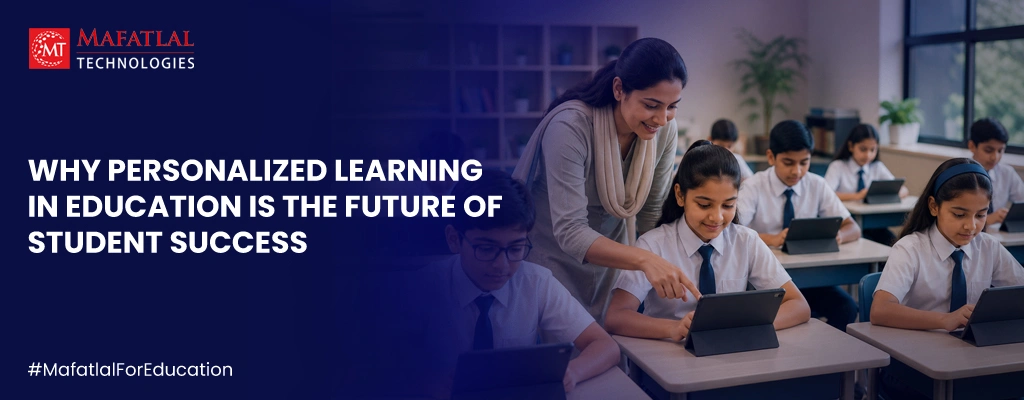
Why Personalized Learning in Education Is the Future of Student Success
- Admin
Imagine a classroom of thirty students. The teacher is explaining the same concept to everyone. Some students understand it immediately and are ready for the next challenge. Others need additional examples to grasp the topic. A few may already be struggling to keep up, hesitant to ask for help. Despite having the same teacher, the same lesson, and the same classroom, each student experiences learning differently. This has always been one of education's greatest challenges. For decades, traditional education followed a one-size-fits-all approach.
While effective for some learners, it often overlooked the unique strengths, interests, learning styles, and pace of individual students. Today, that is changing. With advancements in technology, data analytics, and intelligent learning platforms, schools are embracing personalized learning in education, an approach that places the learner at the center of the educational experience.
Rather than expecting students to adapt to a standardized system, personalized learning adapts the learning experience to meet the needs of each student. As a result, learners become more engaged, motivated, and empowered to achieve their full potential.
What Is Personalized Learning in Education?
At its core, personalized learning in education is an approach that tailors teaching methods, learning pathways, content, and pace to the individual needs of each student.
Every learner has unique strengths and challenges. Some students learn best through visual content, while others benefit from hands-on activities or collaborative discussions. Some may advance quickly in one subject while requiring additional support in another.
Personalized learning recognizes these differences and creates opportunities for students to learn in ways that work best for them.
This approach shifts the focus from delivering the same instruction to every learner toward creating flexible learning experiences that support individual growth and success.
Why Traditional Learning Models Need to Evolve
The world students are preparing to enter is changing rapidly.
Future careers will require critical thinking, creativity, adaptability, collaboration, and continuous learning. Yet traditional education systems often prioritize standardization over individualization.
When students are expected to learn at the same pace and in the same manner, some inevitably fall behind while others fail to reach their full potential.
Education today must move beyond the idea that success looks the same for every learner.
Instead, schools need learning environments that recognize individual strengths, accommodate different learning styles, and support students throughout their unique educational journeys.
This is why personalized learning is becoming a cornerstone of modern education.
Creating Adaptive Learning Environments for Every Student
One of the most significant advantages of personalized learning is the creation of adaptive learning environments.
Adaptive learning environments use technology and real-time insights to adjust learning experiences based on student performance, progress, and needs.
For example, if a student struggles with a concept, the system can recommend additional resources, practice exercises, or alternative explanations. Conversely, students who demonstrate mastery can move ahead and explore more advanced topics.
This flexibility ensures that learning remains challenging enough to promote growth while providing the support needed to build confidence.
Adaptive learning environments help create a classroom where every student can learn at their own pace without feeling left behind or held back.
The Role of Data-Driven Education in Personalization
Effective personalization relies on understanding students deeply.
This is where data-driven education plays a crucial role.
Every interaction within a learning environment generates valuable insights. Assessment results, participation levels, attendance patterns, learning behaviors, and engagement metrics all contribute to a clearer picture of student progress.
When analyzed effectively, this data enables educators to make informed decisions about instruction, interventions, and support strategies.
Rather than relying solely on periodic examinations, teachers can continuously monitor learning progress and identify areas where students may need additional assistance.
Data-driven education transforms information into action, helping schools create more responsive and effective learning experiences.
Individualized Teaching Strategies: Meeting Students Where They Are
Every student learns differently.
Recognizing these differences is the foundation of individualized teaching strategies.
Examples include:
- Providing multiple learning pathways
- Offering differentiated assignments
- Using varied teaching methods
- Adjusting learning pace
- Delivering targeted interventions
- Encouraging self-directed learning
When instruction aligns with student needs, learning becomes more meaningful and impactful.
Students feel understood, supported, and motivated to engage actively in their education.
Improving Student Engagement in Classrooms
Engagement is one of the strongest indicators of academic success.
When students feel disconnected from what they are learning, participation decreases, motivation declines, and learning outcomes often suffer.
Personalized learning directly addresses this challenge by making education more relevant and meaningful.
Through improved student engagement in classrooms, learners become active participants rather than passive recipients of information.
Students are more likely to engage when:
- Learning aligns with their interests
- They have ownership of their learning journey
- Content matches their skill level
- Feedback is timely and personalized
- Learning experiences feel relevant to real-life situations
Engaged students are more likely to retain knowledge, develop confidence, and achieve stronger academic outcomes.
How Modern Education Technology Is Driving Personalization
The growth of modern education technology has accelerated the adoption of personalized learning across schools and institutions.
Technology provides educators with tools to understand student needs more effectively while delivering tailored learning experiences at scale.
Modern education technology supports:
- Personalized learning pathways
- Real-time progress monitoring
- Intelligent assessments
- Interactive learning experiences
- Data-driven decision-making
- Continuous feedback and support
Importantly, technology does not replace teachers.
Instead, it empowers educators with deeper insights and more effective tools, enabling them to focus on what matters most supporting student growth and success.
How Mafatlal Technologies Enables Personalized Learning
At Mafatlal Technologies, we believe that every learner deserves an education experience tailored to their unique needs, strengths, and aspirations.
As educational institutions navigate the shift toward learner-centric education, our technology solutions help schools create personalized, engaging, and future-ready learning environments.
Through platforms like Medha, Mafatlal Technologies empowers educators with actionable insights that support student-centered learning.
Our solutions help institutions:
Create Adaptive Learning Environments
By leveraging real-time learning data, educators can provide personalized support and learning pathways that align with individual student needs.
Strengthen Data-Driven Education
Medha enables schools to transform academic and behavioural data into meaningful insights, helping educators make informed decisions that improve student outcomes.
Support Individualized Teaching Strategies
Teachers gain visibility into student performance, learning gaps, and progress trends, allowing them to tailor instruction more effectively.
Enhance Student Engagement in Classrooms
Interactive learning experiences, personalized content delivery, and continuous progress tracking help keep students motivated and actively involved in learning.
Leverage Modern Education Technology for Better Outcomes
Mafatlal Technologies combines innovation, analytics, and digital learning tools to help institutions create connected learning ecosystems that support long-term student success.
Our goal is simple: empower educators with the technology they need to help every learner thrive.
The Future of Education Is Personal
The future of education is not about teaching every student the same way.
It is about understanding each learner's needs, strengths, goals, and potential.
As schools continue to embrace digital transformation, personalized learning will become increasingly important in preparing students for an ever-changing world.
The institutions that succeed will be those that combine human expertise with intelligent technology to create meaningful, individualized learning experiences.
When students receive the right support at the right time, they become more confident, engaged, and capable of achieving their goals.
Conclusion
Every student enters the classroom with unique talents, aspirations, and learning needs. The challenge for educators is creating environments where every learner can succeed. Through personalized learning in education, schools can move beyond one-size-fits-all instruction and embrace more flexible, responsive, and student-centered approaches.
By leveraging adaptive learning environments, data-driven education, individualized teaching strategies, enhanced student engagement in classrooms, and innovative modern education technology, institutions can create learning experiences that unlock the full potential of every student. The future of student success is not standardized, it is personalized.