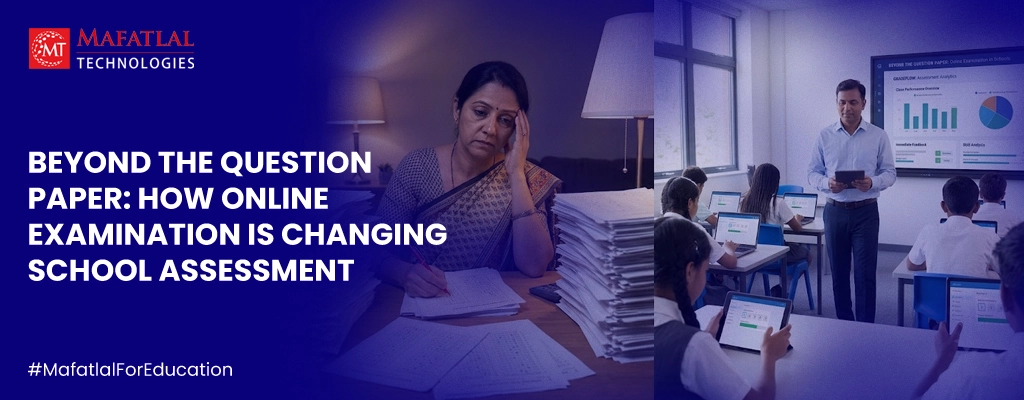
Imagine a teacher sitting with a pile of answer sheets after a long examination day. Each paper needs to be checked, marks need to be recorded, and results must be prepared. Meanwhile, students and parents are waiting to understand how well the students have performed. This familiar process takes time, effort, and careful attention.
Now, imagine a different approach. Students complete their exams digitally, teachers can access responses more efficiently, and results can be organised through a single platform. This is how online examination is changing the way schools approach student assessment.
As schools explore new ways to improve teaching and learning, digital examination is becoming an important part of modern education. It is not just about replacing paper with screens. It is about making assessment more organised, accessible, and useful for both teachers and students.
What Is Online Examination in Schools?
Online examination is the process of conducting tests and examinations through digital platforms instead of relying entirely on traditional paper-based methods. Students can answer questions using computers or other supported devices, while teachers and administrators manage examinations through digital systems.
A well-designed online examination system can support different question formats, examination schedules, response submission, and result management, depending on its features.
For schools, this approach can simplify several stages of the examination process. From preparing question papers to organising results, digital tools help bring important assessment activities into a more structured workflow.
Why Schools Are Moving Towards Digital Assessment
School assessment involves more than conducting examinations. Teachers need to evaluate student understanding, identify learning gaps, maintain records, and communicate progress.
Traditional examination methods remain valuable, but managing them can become challenging when schools handle multiple classes, subjects, and assessments throughout the academic year.
This is where digital assessment can make a difference.
1. Simplifying Examination Management
Preparing question papers, organising examinations, checking responses, and compiling marks require considerable time and coordination. Online testing can help schools manage these activities more efficiently, depending on the platform's capabilities.
2. Supporting Timely Results
Digital systems can reduce manual work involved in collecting and organising responses. Objective questions may also support automatic evaluation where the system provides this feature. Teachers can then focus more attention on understanding student performance and planning the next steps.
3. Improving Access to Assessment Records
Maintaining examination records is an important responsibility for schools. A digital examination platform can help organise assessment information and make relevant records easier to access for authorised users.
4. Encouraging Regular Evaluation
Assessment does not need to happen only during term-end examinations. Schools can use online testing for class tests, practice assessments, revision exercises, and periodic evaluations to understand student progress throughout the academic year.
Beyond Marks: Making Student Assessment More Meaningful
A student's performance cannot always be understood through a final score alone. Teachers also need to know which concepts students have understood and where additional support may be required.
A thoughtful online assessment approach can help teachers review performance patterns and identify areas that may need further attention, when the platform provides suitable reporting and analytics.
For example, if several students struggle with the same topic, a teacher can revisit the concept, provide additional practice, or try a different teaching method.
This makes student assessment more useful for everyday classroom decisions. Instead of viewing examinations only as a way to assign marks, schools can use assessment as an opportunity to understand learning needs and improve teaching strategies.
However, technology does not replace a teacher's judgement. Teachers remain essential in interpreting results, understanding individual circumstances, and providing meaningful feedback.
What Should Schools Look for in an Online Examination System?
Choosing the right platform is an important step towards successful digital assessment. Schools should consider their academic requirements, existing processes, and the needs of teachers and students.
Some important factors include:
- Easy examination creation: Teachers should be able to prepare and organise tests without unnecessary complexity.
- Flexible assessment formats: The platform should support question types suited to different subjects and learning objectives.
- Efficient result management: Organised results and useful reports can help teachers review student performance.
- Reliable access and security: Schools should consider data protection, user permissions, system reliability, and appropriate examination controls.
- Teacher-friendly workflows: Digital tools should simplify assessment activities rather than add more administrative work.
The goal is to choose technology that fits naturally into the school's academic processes and supports better assessment practices.
How Mafatlal Technologies Supports Digital Education
At Mafatlal Technologies, the focus is on helping educational institutions adopt technology that supports teaching, learning, and academic management.
Its digital education solutions include online examination capabilities designed to support the shift towards more organised and technology-enabled assessment processes. By bringing examination activities into a digital environment, schools can work towards simplifying assessment management and improving how examination-related information is handled.
When evaluating an online examination solution, schools should look for capabilities that match their specific requirements, including test creation, examination administration, and result management where supported.
Mafatlal Technologies works towards supporting schools in building more connected digital education environments, where technology can complement teachers' efforts and contribute to smoother academic operations.
The objective is not simply to digitise an existing process. It is to help educational institutions explore practical ways to make their academic workflows more efficient while keeping student learning at the centre.