
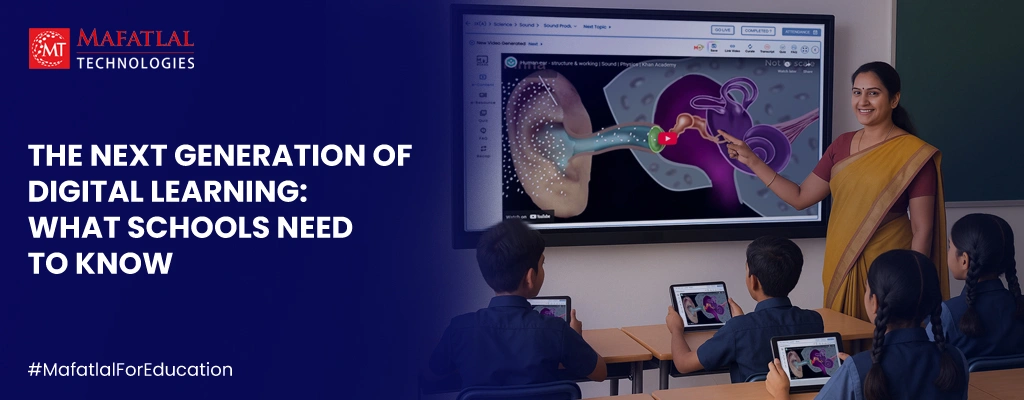
The Next Generation of Digital Learning: What Schools Need to Know
- Admin
Digital learning is changing how schools approach teaching, assessment, collaboration, and student engagement. What began with digital content and online resources has evolved into connected learning environments that combine education technology, data, interactive content, and personalised experiences.
For schools, the next phase of digital learning is not simply about adding more devices to classrooms. It is about using education technology thoughtfully to create learning experiences that are accessible, engaging, and responsive to individual student needs. As schools prepare for the future, understanding these developments in digital education can help them make informed decisions about their digital transformation journey.
Institutions exploring this shift often start with a foundational platform such as a Digital Classroom or a Learning Management Software — before layering in more advanced digital learning capabilities.
What Is the Next Generation of Digital Learning?
The next generation of digital learning goes beyond accessing lessons through a screen. It connects teachers, students, content, assessments, and academic insights within a more integrated learning environment.
Modern schools are increasingly exploring digital classrooms, smart classrooms, interactive content, online assessments, and data-supported teaching. These technologies can complement classroom instruction while giving educators additional ways to support different learning needs. According to UNESCO's 2025 report on AI and the future of education, this shift calls for a human-centred, equitable approach to integrating technology into learning systems rather than adoption for its own sake.
For example, a teacher can use digital assessments to understand how students are progressing and then provide additional practice or personalised resources based on their needs — a practical entry point into digital learning for any school.
Key Technologies Shaping Digital Learning
AI-Enabled Learning
AI-enabled learning is becoming an important part of modern education. Artificial intelligence can help analyse learning patterns, recommend relevant resources, support assessments, and provide teachers with meaningful academic insights.
The objective is not to replace educators. Instead, AI can reduce repetitive tasks and provide information that helps teachers spend more time on instruction, interaction, and student support. UNESCO's research emphasises that AI should reduce teacher workload rather than add to it, which is a useful principle to apply when evaluating any AI-enabled learning tool. Solutions such as AI Enablement are built around this same idea — supporting teachers, not replacing them.
Online Learning Platforms
Online learning platforms provide students with access to digital lessons, assessments, practice activities, and learning resources beyond the physical classroom.
When integrated effectively, these platforms can support continuity between classroom learning and independent practice as part of a broader digital learning strategy. They can also give teachers a clearer view of how students engage with learning materials through tools like Online Examination systems.
Digital and Smart Classrooms
Digital classrooms combine technology with traditional teaching methods, while smart classrooms can bring together interactive displays, multimedia resources, digital assessments, and connected learning tools.
The value comes from purposeful implementation. Technology should enhance the learning experience rather than become a distraction — a principle that applies to every layer of digital learning, from a single Digital Classroom setup to a district-wide rollout.
Blended Learning
Blended learning combines face-to-face instruction with digital learning experiences. This approach gives teachers flexibility to introduce concepts in class while using digital resources for revision, practice, assessment, or extended learning.
A mathematics lesson, for instance, could include teacher-led explanation followed by interactive digital practice that allows students to reinforce the concept at their own pace — a simple but effective example of blended learning in action.
One of the biggest opportunities created by digital education is personalized learning. Students have different learning speeds, strengths, and areas that require additional practice.
Technology can help educators identify these differences through assessment data and learning activity. Teachers can then provide appropriate resources or interventions rather than following exactly the same learning path for every student. This is one of the areas where digital learning delivers the clearest, most measurable value.
Personalised learning can support:
- Individual learning needs
- Targeted practice
- Flexible learning pathways
- Continuous assessment
- Student engagement
- Progress monitoring
This makes technology more meaningful because it supports the learner rather than simply digitising existing teaching materials. An Education Resources Planning system can help schools allocate the right resources to deliver personalized learning consistently across classrooms.
Building Future-Ready Schools
Becoming a future-ready school does not require adopting every new technology available. Instead, schools should develop a clear digital learning strategy aligned with their academic objectives.
Before implementing new solutions, school leaders should consider:
- Learning objectives — What educational challenge will the technology address?
- Teacher readiness — Do educators have the training and support they need?
- Student experience — Will the solution make learning more accessible and engaging?
- Integration — Can different tools work together effectively?
- Data and insights — Can the school use learning information responsibly to improve decisions?
- Scalability — Can the solution support the institution as its requirements evolve?
A learning management system may support content organisation and course administration, while other digital solutions can focus on assessment, personalized learning, analytics, or interactive classroom experiences. Schools should therefore evaluate education technology based on their specific requirements rather than choosing tools simply because they are popular — a key step on the path to becoming a genuinely future-ready school.
Best Practices for Implementing Digital Learning
Successful digital transformation depends as much on implementation as technology. Schools can begin their digital learning journey by:
- Identifying specific academic and administrative goals.
- Involving teachers in technology decisions.
- Providing ongoing professional development.
- Introducing solutions gradually.
- Monitoring student engagement and learning outcomes.
- Collecting feedback from teachers, students, and parents.
- Reviewing technology adoption regularly.
Most importantly, schools should maintain a balance between technology and human interaction. Effective digital education works best when technology strengthens the relationship between teachers and learners.
How Mafatlal Technologies Supports Digital Learning
A connected digital learning ecosystem brings each of these pieces together on one platform:
- Digital Classroom — the foundation for interactive, technology-enabled teaching.
- Learning Management Software — a learning management system for organising content, courses, and progress.
- AI Enablement — bringing AI-enabled learning and data-driven insights into daily teaching.
- Online Examination — supporting continuous assessment as part of an online learning platform.
- Tracking & Monitoring Application — giving schools real-time visibility into engagement and outcomes.
- Education Resources Planning — helping institutions plan resources for personalized learning at scale.
You can explore the complete range of solutions on our Products page or read more on the Mafatlal Technologies blog.
Conclusion
The next generation of digital learning is moving towards more connected, personalised, and intelligent learning experiences. From AI-enabled learning and online learning platforms to digital classrooms, blended learning, and smart classrooms, education technology is giving schools new ways to support teaching and student development.
However, successful transformation is not about using technology for its own sake. It is about selecting the right solutions, preparing educators, understanding student needs, and creating an environment where technology and teaching work together.
For schools aiming to become future-ready schools, the opportunity lies in building a thoughtful digital learning strategy that supports personalized learning, informed decision-making, and meaningful digital education experiences. If you're ready to explore what this looks like for your institution, you can book a consultation with our team.
What makes a school "future-ready"? A future-ready school has a clear digital learning strategy aligned to academic goals, trained teachers, and integrated tools — such as a learning management system, smart classrooms, and assessment platforms — that work together rather than in isolation.
How can schools start adopting digital learning? Schools can start small by identifying specific goals, involving teachers early, and introducing one platform — such as a Digital Classroom or Learning Management Software — before expanding their broader digital educationstrategy.