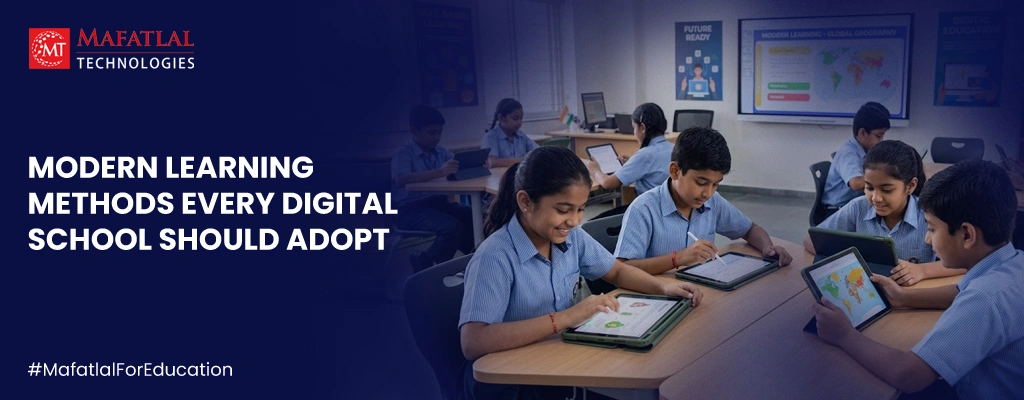
Education is no longer confined to textbooks and traditional classrooms. With the rise of digital learning in schools, the way students learn, interact, and perform has transformed significantly. Today’s learners require more than just theoretical knowledge; they need interactive, personalized, and skill-based education. This is where modern learning methods play a crucial role in shaping future-ready students.
At Mafatlal Technologies, we believe that adopting the right blend of smart learning approaches and technology-driven strategies is essential for successful digital transformation in K-12 education.
Why Modern Learning Methods Are Essential
Traditional teaching methods often follow a one-size-fits-all approach. However, modern education focuses on personalized and adaptive learning, ensuring that every student learns at their own pace.
With the integration of technology, schools are now able to create interactive and engaging environments, improving both understanding and retention.
Modern learning methods:
- Enhance student engagement
- Improve conceptual clarity
- Encourage critical thinking
- Prepare students for real-world challenges
Top Modern Learning Methods Every Digital School Should Adopt
- Adaptive Learning (AI-Based Personalization)
Adaptive learning uses AI and data to personalize learning paths for each student. It analyses performance and provides customized content based on strengths and weaknesses.
This ensures that no student is left behind and learning becomes more effective.
- Gamification in Learning
Gamification integrates game elements like rewards, levels, and challenges into education, making learning fun and engaging.
It boosts motivation, participation, and overall learning outcomes.
- Microlearning (Bite-Sized Learning)
Microlearning delivers content in short, focused modules, making it easier for students to understand and retain information.
Ideal for today’s students with shorter attention spans.
- Smart Classroom Strategies
Modern classrooms are equipped with:
- Interactive boards
- Digital content
- Simulations and visual tools
These smart classroom strategies make complex topics easier to understand and improve student engagement.
- Mobile Learning (m-Learning)
Learning is no longer limited to classrooms. With mobile learning, students can access content anytime, anywhere.
This supports continuous learning beyond school hours.
- Project-Based & Experiential Learning
Students learn by working on real-life problems and projects, helping them develop:
- Problem-solving skills
- Collaboration
- Creativity
This method prepares students for real-world challenges.
Role of Smart Learning in Digital Schools
Smart learning combines technology, data, and innovative teaching methods to create a more effective learning experience.
It focuses on:
- Personalized learning journeys
- Real-time performance tracking
- Data-driven insights
This approach plays a key role in the digital transformation in K-12 education, helping schools move from traditional systems to intelligent learning ecosystems.
Benefits of Adopting Modern Learning Methods
Schools that embrace modern learning methods experience:
- Improved student performance
- Better exam readiness
- Increased student engagement
- Stronger conceptual understanding
- Future-ready learners
Digital learning enables students to actively participate rather than passively consume information, leading to better academic outcomes.
At Mafatlal Technologies, we empower schools with:
- AI-powered learning platforms
- Smart classroom solutions
- Robotics labs and digital infrastructure
- Data-driven assessment systems
Our solutions are designed to support modern learning methods, enabling schools to create a truly smart learning environment.
Conclusion
The future of education lies in adopting modern learning methods that are flexible, personalized, and technology driven.
Schools that embrace digital learning in schools, implement smart classroom strategies, and focus on digital transformation in K-12 education will be better equipped to deliver meaningful and impactful learning experiences.