
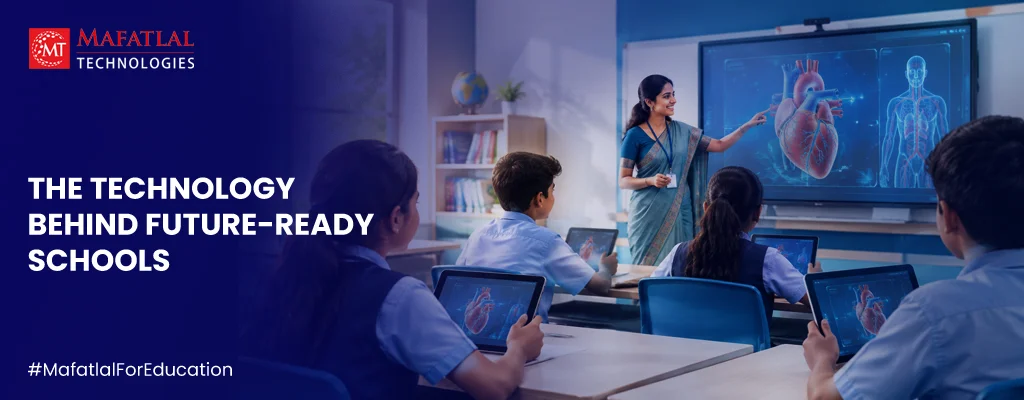
The Technology Behind Future-Ready Schools
- Admin
Education is no longer confined to textbooks, blackboards, and traditional classroom routines. As technology continues to shape the way people learn, communicate, and work, schools are also evolving to prepare students for a changing world. This shift is creating a new generation of future-ready schools where technology supports better teaching, personalized learning, collaboration, and informed decision-making.
Becoming future-ready, however, is not simply about putting more devices in classrooms. It is about creating an environment where technology has a clear purpose and works alongside teachers to improve the learning experience. From digital infrastructure and smart classrooms to AI-powered tools and connected learning environments, technology is becoming an important part of modern education.
What Makes a School Future-Ready?
A future-ready school is one that is prepared to adapt to changing educational needs, emerging technologies, and the skills students will need in the future.
This involves more than introducing a few digital tools. It requires a combination of strong infrastructure, capable educators, relevant content, reliable EdTech solutions, and a willingness to continuously improve.
A future-ready approach brings technology into everyday teaching while keeping students and teachers at the centre of the learning experience.
1. Strong Digital Infrastructure Creates the Foundation
Technology cannot work effectively without the right foundation. Reliable internet connectivity, digital devices, secure networks, interactive displays, and other essential resources form the backbone of school digital transformation.
A strong digital infrastructure allows schools to provide consistent access to digital learning resources and enables teachers to incorporate technology into their lessons with greater confidence.
It also creates the foundation needed for more advanced solutions such as AI-powered learning platforms, learning analytics, digital assessments, and connected classrooms.
2. Smart Classrooms Make Learning More Interactive
The traditional classroom is becoming more dynamic with the introduction of smart classrooms.
Interactive displays, multimedia resources, digital simulations, and educational applications can help teachers explain concepts in different ways. Instead of relying on a single teaching method, educators can combine visual, audio, and interactive resources to make lessons more engaging.
The value of a smart classroom is not the technology itself. It lies in how teachers use that technology to encourage curiosity, participation, discussion, and deeper understanding.
3. AI in Education Supports More Personalized Learning
One of the most significant developments in education technology is the growing use of AI in education.
Artificial intelligence can analyse learning patterns, identify areas where students may need additional support, and recommend relevant learning resources. This can help schools move towards more personalized and responsive learning experiences.
For example, an AI-enabled platform can identify that a student is struggling with a particular concept and recommend additional practice or suitable resources.
This does not mean AI replaces teachers. Instead, it can give teachers additional insights that help them understand their students and make more informed instructional decisions.
4. Connected Classrooms Improve Collaboration
Learning today does not have to stop when a student leaves the classroom.
Connected classrooms bring together students, teachers, digital resources, and learning platforms through technology. This makes it easier to share resources, collaborate on activities, access assignments, and continue learning beyond classroom hours.
Connected learning environments can also support communication between different stakeholders in the education ecosystem, helping schools create a more integrated learning experience.
5. Learning Platforms Bring Resources Together
As schools adopt multiple digital tools, managing learning resources can become challenging. A learning management system can help bring important learning activities and resources into one digital environment.
Teachers can use such platforms to share content, manage assignments, monitor progress, and communicate with students. Students can access learning materials and activities from a central location.
However, the effectiveness of a learning platform depends on how well it fits into the school's overall teaching approach. Technology should simplify the learning journey rather than add unnecessary complexity.
6. Data and Learning Analytics Support Better Decisions
Modern schools generate valuable information through assessments, classroom activities, attendance, and student interactions with digital platforms.
Learning analytics can help transform this information into useful insights. Schools can identify learning patterns, understand areas where students may require support, and track progress over time.
For teachers, these insights can support targeted interventions. For school leaders, they can provide a broader understanding of academic trends and help inform planning.
When used responsibly, data can become a powerful tool for improving educational outcomes.
7. Technology Integration Builds a Culture of Innovation
Successful technology integration is not a one-time project. It is an ongoing process.
Schools need to encourage teachers to experiment with new teaching approaches, provide appropriate training, and create an environment where innovation is supported.
This is where school innovation becomes important. A future-ready school is willing to evaluate what works, learn from experience, and adapt its approach as technology and educational needs evolve.
Teachers remain central to this process. Technology can provide tools and insights, but educators bring the experience, empathy, and understanding needed to make learning meaningful.
Building the Future of Education
The journey towards future-ready schools is ultimately about preparing students for a world that is constantly changing.
Emerging technologies such as artificial intelligence, data analytics, cloud-based platforms, interactive learning tools, and connected devices will continue to influence education. But technology alone cannot create better learning outcomes.
The real transformation happens when technology, teachers, students, infrastructure, and educational goals work together.
Schools that take this balanced approach can create learning environments that are more flexible, connected, and responsive to individual needs.
Conclusion
The technology behind future-ready schools is not about replacing traditional education with digital tools. It is about using technology thoughtfully to strengthen what schools already do best helping students learn, grow, and prepare for the future.
From digital infrastructure and smart classrooms to AI in education, connected classrooms, learning platforms, and learning analytics, modern EdTech solutions are creating new possibilities for teaching and learning.
The schools that will truly be ready for the future will not simply be those with the most technology. They will be the ones that know how and when to use technology effectively with teachers and students always at the centre of the experience.