
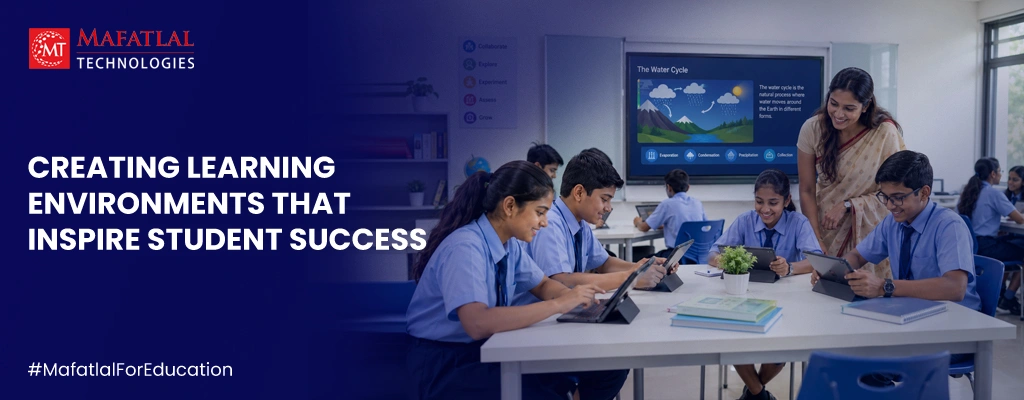
Creating Learning Environments That Inspire Student Success
- Admin
Creating a strong learning environment is about more than having well-equipped classrooms or access to modern technology. It is about creating a space where students feel encouraged to participate, ask questions, collaborate, and take ownership of their learning. When students feel supported and engaged, schools can create the right conditions for lasting student success.
For educators and school leaders, this means looking beyond academic scores and considering the complete learning experience. Classroom interactions, teaching approaches, peer collaboration, teacher support, and opportunities for personalised learning can all contribute to stronger learning outcomes, higher student motivation, and long-term academic achievement.
Schools that invest in digital tools such as a well-designed Digital Classroom or a modern Learning Management Software often find it easier to build these conditions at scale, since technology can support (not replace) strong teaching and genuine classroom engagement.
What Makes a Learning Environment Effective for Student Success?
An effective learning environment gives students the opportunity to learn at their own pace while remaining connected to their teachers and peers. It combines clear instruction, meaningful activities, constructive feedback, and opportunities for participation — all of which lay the foundation for student success.
A positive environment can help students develop:
- Confidence in their abilities
- Curiosity and critical thinking
- Communication skills
- Collaboration skills
- Greater ownership of learning
- Consistent learning habits
For example, instead of relying entirely on teacher-led explanations, a classroom can include discussions, group activities, practical projects, and interactive learning resources. This creates more opportunities for classroom engagement and helps students apply what they learn, which research organisations like Edutopia have repeatedly linked to stronger outcomes.
Creating a Student-Centered Learning Experience
Student-centered learning places learners at the heart of the educational experience. Rather than expecting every student to follow exactly the same path, teachers can provide opportunities for students to explore concepts, ask questions, and demonstrate their understanding in different ways a proven driver of student success.
This approach can be particularly valuable in classrooms where students have different learning preferences and levels of understanding. According to Edutopia's overview of student-centered learning, a student-centered environment helps learners become independent and take charge of their own education, while the teacher's role shifts from "imparter of knowledge" to coach and consultant.
Teachers can encourage student-centered learning by:
- Offering choices in learning activities
- Connecting lessons to real-world examples
- Encouraging students to ask questions
- Using project-based activities
- Providing regular and constructive feedback
When students have a greater role in their learning journey, they become more engaged and develop stronger ownership of their academic progress — a key building block of student success.
Encouraging Classroom Engagement and Student Motivation
Strong classroom engagement is closely connected to student motivation. Students are more likely to participate when lessons are interactive, relevant, and connected to their interests.
Simple changes can make classroom experiences more engaging. A teacher might introduce a concept through a real-world example, use a short activity to encourage discussion, or divide students into small groups to solve a problem together. Tools like an Online Examination platform can also add instant feedback loops that keep students motivated between lessons.
Recognition also matters. Celebrating progress, effort, and improvement can encourage students to continue participating and developing their skills.
The objective is not to make every lesson entertaining. Instead, it is to create meaningful opportunities for students to interact with the subject, stay motivated, and understand why the learning matters — all of which feed directly into student success.
The Role of Teacher Support and Collaborative Learning
Technology and teaching resources can support education, but teachers remain central to the learning experience. Effective teacher support helps students receive guidance, feedback, and encouragement throughout their academic journey, which is one of the strongest predictors of student success.
Teachers can also create opportunities for collaborative learning, where students work together to solve problems, share ideas, and learn from different perspectives.
For example, a science project could involve students working in groups to research a topic, develop a presentation, and explain their findings to the class. Such activities can strengthen subject knowledge while also developing communication, teamwork, and problem-solving skills. A Tracking & Monitoring Application can help teachers keep an eye on how each group and each student is progressing, so support reaches the students who need it most.
Using Personalized Learning to Support Student Success
Every learner has different strengths, interests, and areas that may require additional practice. Personalized learning can help schools respond to these individual needs and is increasingly recognised as central to student success.
Through regular assessments and learning insights, educators can identify areas where students may benefit from additional explanation, practice, or advanced activities. The OECD's research on personalising education notes that personalisation raises important questions about how learning sciences and data can be used responsibly to meet each learner where they are.
A personalised approach can include:
- Individual learning activities
- Targeted practice
- Flexible learning pathways
- Continuous progress monitoring
- Timely feedback
The goal is to ensure that students receive appropriate support while continuing to develop academic achievement at their own pace. An Education Resources Planning system can help schools allocate the right resources to the right students at the right time, making personalized learning easier to deliver consistently.
Building an Environment for School Improvement
Creating better learning environments should be an ongoing process. Schools can use teacher feedback, student experiences, academic data, and classroom observations to identify opportunities for school improvement and, ultimately, greater student success.
A practical approach includes:
- Understand student needs — Gather insights through assessments and classroom observations.
- Strengthen teaching practices — Encourage educators to share successful strategies and provide ongoing teacher support.
- Encourage participation — Create more opportunities for discussion and collaborative learning.
- Monitor learning outcomes — Track progress consistently rather than relying only on final examinations.
- Adapt where needed — Use insights to refine teaching approaches and student support.
This continuous approach can help schools create learning experiences that support both academic achievement and personal development.
How Technology Supports Student Success
Digital tools cannot replace good teaching, but they can remove friction so teachers and students can focus on what matters. Purpose-built platforms bring the learning environment, classroom engagement, and personalized learning discussed above into one connected system:
- A Digital Classroom brings interactive lessons, resources, and collaboration tools into a single space.
- A Learning Management Software helps teachers plan, deliver, and track learning outcomes in real time.
- AI Enablement solutions can help identify learning gaps early, supporting truly personalized learning at scale.
- An Online Examination system provides timely, actionable feedback that keeps students motivated.
- A gives teachers and school leaders visibility into engagement and progress across every classroom.
You can explore the complete range of solutions on our Products page or read more educator-focused insights on the Mafatlal Technologies blog.
Conclusion
Creating an environment that inspires student success requires more than improving classroom infrastructure. It involves creating meaningful learning experiences where students feel supported, motivated, and confident enough to participate actively.
By combining student-centered learning, personalized learning, collaborative learning, strong teacher support, and continuous attention to learning outcomes, schools can build environments that encourage academic achievement and lifelong learning.
For schools focused on long-term school improvement, the goal should be to create classrooms where every student has meaningful opportunities to learn, participate, collaborate, and progress. If your institution is ready to take the next step, you can book a consultation with our team to explore how the right technology can support student success at your school.