Walk into any school today, and you’ll notice something interesting.
Learning no longer follows a single rhythm.
A discussion might begin on the blackboard, continue through a digital worksheet, and finally make sense during an online practice session at home. Students move between notebooks and screens almost effortlessly but teaching often struggles to keep up.
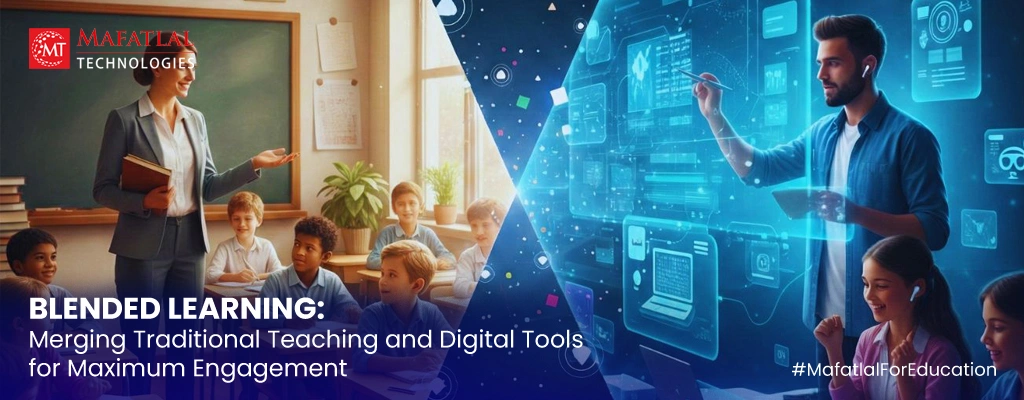
This gap is exactly where blended learning steps in. By intentionally combining classroom instruction with digital tools, schools can create learning experiences that are more engaging, flexible, and effective without losing the human connection that education depends on.
What Is Blended Learning?
Blended learning isn’t about adding screens to lessons; it’s about rethinking how teaching and learning connect beyond the classroom.
Blended learning in schools combines:
- Teacher-led classroom instruction
- Digital content for practice, review, and reinforcement
- Constant feedback through technology insights
Blended learning lets traditional and digital learning work together in a way that makes sense.
A good blended learning model makes sure that students learn things in class, revisit them online, practise at their own speed, and come back with more confidence and understanding.
At Mafatlal Technologies, this balance is built into how classrooms function helping teachers plan lessons seamlessly, give students structured digital access, and track understanding without disrupting the flow of teaching.
A well-designed blended learning model ensures students learn concepts in class, revisit them online, practise at their own pace, and return with greater confidence and clarity, supported by systems that keep both teachers and learners aligned.
Why Blended Learning Works Better Than Either Method Alone ?
One of the biggest blended learning benefits is flexibility—without losing structure.
Blended learning helps students with:
- Different ways and speeds of learning
- Better remembering and reviewing
- More confidence and participation
For teachers, it makes it possible:
A strong blended education system helps NEP-aligned, future-ready learning by making sure that all classrooms are the same.
This is why hybrid learning in education is no longer an exception; it's becoming the norm.
Blended Classroom Strategies That Actually Work
Successful blended learning doesn’t happen by accident. It requires clear strategies and the right support.
Some effective blended classroom strategies include:
- Introducing concepts in class and reinforcing them digitally
- Using short videos or simulations before or after lessons
- Combining worksheets with interactive assessments
- Encouraging discussion both offline and online
When these strategies are supported by a single, well-structured platform—like the classroom systems designed by Mafatlal Technologies, teachers spend less time coordinating resources and more time focusing on learning outcomes.
These blended learning approaches keep students actively involved instead of passively listening, making them one of the most effective student engagement strategies in today’s classrooms—especially when technology works quietly in the background to support teaching, not complicate it.
The Role of Digital Tools in Modern Teaching
Digital tools for teaching don't make things more complicated; they make them easier to understand.
Modern classrooms depend on:
- Digital tools for teachers to use to plan lessons
- Modules for practicing and reviewing online
- Easy-to-read dashboards to see how students are doing
Schools can use technology in the classroom without overwhelming teachers thanks to platforms like Mafatlal Technologies. Their classroom-ready solutions support effective methods by keeping everything organised in one place, including content, practice, and insights.
This kind of technology in classrooms helps teachers focus on teaching, not managing tools.
From Engagement to Impact: Why Schools Are Choosing Blended Learning
Blended learning isn’t about screens—it’s about outcomes.
Schools using a strong blended learning model often see:
- Improved classroom engagement techniques
- Better academic consistency
- Higher student ownership of learning
- More confident teachers
By integrating technology into teaching, schools move towards real learning impact.
This is where Mafatlal Technologies comes in: they help schools design blended learning that feels natural, organised, and in line with students’ needs.
The Future of Teaching Is Blended and Human
The future of education doesn’t belong to traditional methods alone, nor to digital tools by themselves.
It belongs to classrooms where:
- Teachers lead with confidence
- Students learn with curiosity
- Technology quietly supports learning in the background
That’s the true power of blended learning.
By combining modern teaching methods with strong human connection, schools can create classrooms that are engaging, inclusive, and ready for what comes next.
And with partners like Mafatlal Technologies becomes not just possible—but practical, scalable, and impactful.