
How AI in Education Is Powering Smarter Data-Driven Education Systems
- Admin
Every Classroom Has Hidden Stories. AI Helps Us Read Them. Walk into any classroom, and you'll find students with different dreams, abilities, and learning journeys. Some students confidently raise their hands. Others quietly struggle without asking for help. Some grasp new concepts immediately, while others need a different approach to fully understand. For teachers, understanding every student's unique needs has always been one of education's greatest challenges. Despite their dedication and experience, identifying learning gaps early can be difficult in busy classrooms filled with diverse learners. Today, technology is helping bridge that gap. Through AI in education, schools can uncover valuable insights hidden within everyday learning activities. By analysing student performance, engagement, attendance, and learning behaviour’s, AI enables educators to make informed decisions that support every learner more effectively.
The future of education isn't about replacing teachers with technology. It's about empowering educators with the right insights to help every student succeed.
The Rise of Data-Driven Education
Education has always relied on data in one form or another. Test scores, attendance records, classroom participation, and assignment submissions have long helped educators evaluate student progress.
However, as classrooms become increasingly digital, the volume of data generated by students has grown exponentially. Every online assessment, learning activity, discussion forum interaction, and resource accessed contributes valuable information about how students learn.
The challenge is no longer collecting data, it is understanding what the data is telling us.
This is where AI in education plays a transformative role. AI systems can process vast amounts of information, identify meaningful patterns, and generate actionable insights that help educators make smarter decisions.
Instead of relying solely on periodic assessments, schools can now gain a continuous understanding of student progress and learning behavior, enabling faster and more effective interventions.
Why Data Alone Is Not Enough
Imagine receiving thousands of pages of student records, assessment results, attendance reports, and engagement metrics.
The information is valuable, but without the ability to analyze it effectively, its impact remains limited.
Many schools face this challenge today. They have access to extensive data but lack the tools needed to transform it into meaningful action.
Artificial Intelligence solves this problem by identifying trends, highlighting risks, and presenting insights in a way that educators can easily understand and use.
Rather than spending hours manually reviewing reports, teachers and administrators can focus on making informed decisions that improve learning outcomes.
This shift from collecting data to understanding data is driving the evolution of modern education systems.
Understanding Student Data Analytics
Every student leaves behind a unique learning footprint.
Their attendance patterns, assessment performance, engagement levels, assignment completion rates, and classroom participation all contribute to a larger story about their educational journey.
Student data analytics is the process of collecting and analyzing this information to uncover insights that support student success.
When powered by AI, student data analytics becomes significantly more effective.
AI can identify patterns that may not be immediately visible to educators. For example, it may detect that students who consistently miss specific learning activities tend to struggle with related assessments later. It can also identify declining engagement levels before they begin affecting academic performance.
These insights allow schools to intervene proactively rather than reactively.
Instead of waiting for problems to become visible, educators can provide support at the right time, helping students stay on track throughout their learning journey.
How Learning Analytics Tools Are Transforming Classrooms
Today's classrooms need more than traditional reporting systems. They need intelligent platforms that provide real-time visibility into student progress.
This is where learning analytics tools are making a significant impact.
These tools collect, organize, and analyse learning data to provide educators with a comprehensive view of student performance and engagement.
Modern learning analytics tools help schools:
- Monitor student progress in real time
- Identify learning gaps early
- Track engagement and participation levels
- Measure learning outcomes
- Evaluate instructional effectiveness
- Support personalized interventions
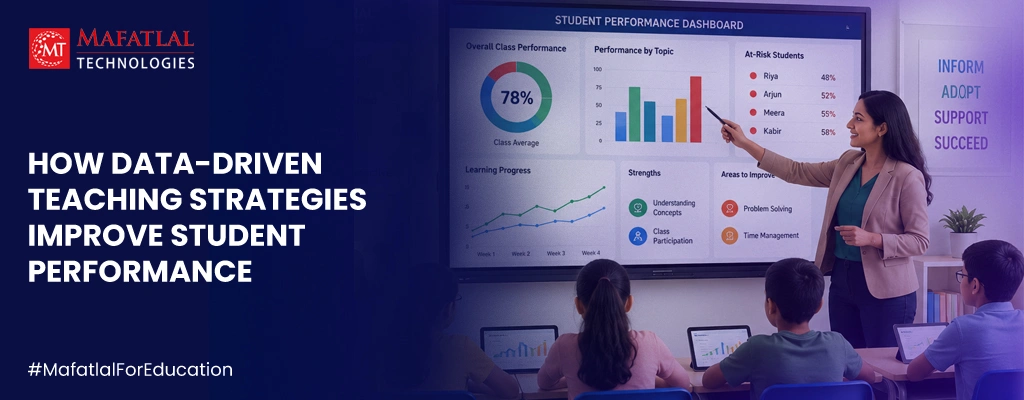
Instead of reviewing multiple reports from different systems, educators can access a centralized dashboard that highlights the information that matters most.
As a result, teaching becomes more responsive, targeted, and effective.
The Role of AI in Personalized Learning Analytics
No two students learn in exactly the same way.
Some thrive through visual content, while others prefer hands-on experiences. Some require additional support in specific subjects, while others are ready for advanced challenges.
Recognizing and responding to these differences is essential for meaningful learning.
The role of AI in personalized learning analytics is to help educators understand each learner at an individual level.
AI analyses performance data, learning behaviour’s, strengths, and challenges to create personalized learning pathways tailored to student needs.
For example, if a student struggles with a particular concept, AI can recommend additional practice materials, targeted learning resources, or alternative instructional approaches. Similarly, students who demonstrate strong understanding can receive advanced content that keeps them challenged and engaged.
This level of personalization helps ensure that learning is neither too difficult nor too easy, creating a more effective and engaging educational experience.
AI for Academic Performance: Turning Insights Into Action
One of the most powerful applications of AI is its ability to predict potential challenges before they occur.
Traditional assessment models often identify problems after performance has already declined. AI changes this approach by continuously monitoring student data and identifying early warning signs.
Through AI for academic performance, schools can gain predictive insights that support timely intervention.
These insights can help educators:
- Identify students who may be at risk academically
- Detect declining engagement levels
- Monitor progress toward learning goals
- Provide targeted academic support
- Improve student retention and success rates
Rather than reacting to poor results, educators can act proactively to help students overcome challenges before they become significant obstacles.
This shift from prediction to prevention is one of the most valuable contributions of AI in modern education.
Empowering Teachers Through Intelligent Decision-Making
There is often a misconception that AI will replace educators.
In reality, the opposite is true.
AI is most effective when it works alongside teachers, enhancing their ability to understand and support students.
While AI can analyse data at scale, it cannot replace the empathy, mentorship, creativity, and human connection that teachers bring to the classroom every day.
What AI does provide is clarity.
With access to meaningful insights, educators can:
- Personalize instruction more effectively
- Allocate classroom time strategically
- Support struggling learners earlier
- Monitor progress continuously
- Make evidence-based instructional decisions
By reducing administrative workload and simplifying data analysis, AI enables teachers to spend more time doing what they do best teaching and inspiring students.
Data-Driven Decision Making in Schools
The benefits of AI extend beyond individual classrooms.
School leaders and administrators are increasingly using data-driven decision making in schools to improve institutional performance and student outcomes.
AI-powered analytics can help administrators evaluate:
- Academic performance trends
- Attendance patterns
- Curriculum effectiveness
- Student engagement levels
- Resource utilization
- School-wide learning outcomes
These insights support strategic planning and enable schools to make informed decisions based on evidence rather than assumptions.
When educational leaders have access to reliable data, they can allocate resources more effectively, implement targeted improvements, and create stronger learning environments for students and teachers alike.
How Mafatlal Technologies Is Enabling Data-Driven Education
As educational institutions continue their digital transformation journey, the need for intelligent and integrated technology solutions has become more important than ever.
At Mafatlal Technologies, we believe that every educational decision should be backed by meaningful insights. Our education-focused digital solutions are designed to help schools, colleges, and institutions harness the power of data to improve learning outcomes and operational efficiency.
Through platforms like Medha, educators gain access to real-time academic insights, student progress tracking, performance monitoring, and actionable analytics that support informed decision-making. Instead of relying solely on end-term reports, schools can continuously monitor learning progress and respond proactively to student needs.
Mafatlal Technologies helps institutions:
- Leverage student data analytics for better learning outcomes
- Utilize learning analytics tools to monitor engagement and performance
- Support personalized learning pathways through intelligent insights
- Improve academic performance through early intervention strategies
- Enable data-driven decision making at both classroom and administrative levels
- Create connected, technology-enabled learning ecosystems
Most importantly, our solutions are built to empower educators. By simplifying data management and providing actionable insights, teachers and school leaders can focus on delivering impactful learning experiences while technology works in the background.
As the education landscape evolves, Mafatlal Technologies remains committed to helping institutions build smarter, more agile, and future-ready learning environments.
Building the Future of Education With AI
As educational institutions continue to embrace digital transformation, the importance of data-driven learning will only continue to grow.
AI is helping schools move beyond traditional approaches to education by providing deeper visibility into student learning, enabling personalized experiences, and supporting informed decision-making at every level.
From advanced student data analytics to intelligent learning analytics tools, AI is becoming a critical component of modern education systems.
The goal is not simply to gather more data. The goal is to use data intelligently to create better learning experiences, improve outcomes, and empower every learner to reach their full potential.
Institutions that successfully combine technology, analytics, and human expertise will be better positioned to prepare students for the future while creating more inclusive and effective learning environments.
Conclusion
Every student has a unique story, and every learning journey leaves behind valuable insights.
The challenge for educators is understanding those insights in time to make a difference.
Through AI in education, schools can harness the power of student data analytics, leverage advanced learning analytics tools, strengthen the role of AI in personalized learning analytics, improve academic performance, and embrace data-driven decision making in schools.
The future of education is not simply digital, it is intelligent, personalized, and insight-driven.
By combining the expertise of educators with the capabilities of artificial intelligence, institutions can create smarter learning environments where every student receives the support, guidance, and opportunities they need to thrive.